PAF010Madeline Hollander, The Moon is Always Full, 2023
Medium
Neon sign (glass, electrical cables, transformer, dimmer)
Date
2023
Dimensions
36 x 40 1/2 inches
Photos
Erin Carey Photography.
Initially trained as a ballet dancer, Madeline Hollander studied cultural anthropology and visual arts, and the combination of experimental choreography and rigorous research lies at the hear of her practice. Her projects often involve intensive investigations of natural and manmade systems as diverse as flood mitigation, temperature control, and concrete production. Often manifesting as an expanded form of movement notation or production, her works transcribe dance and complex patterns as moving objects that render invisible infrastructures suddenly perceptible.
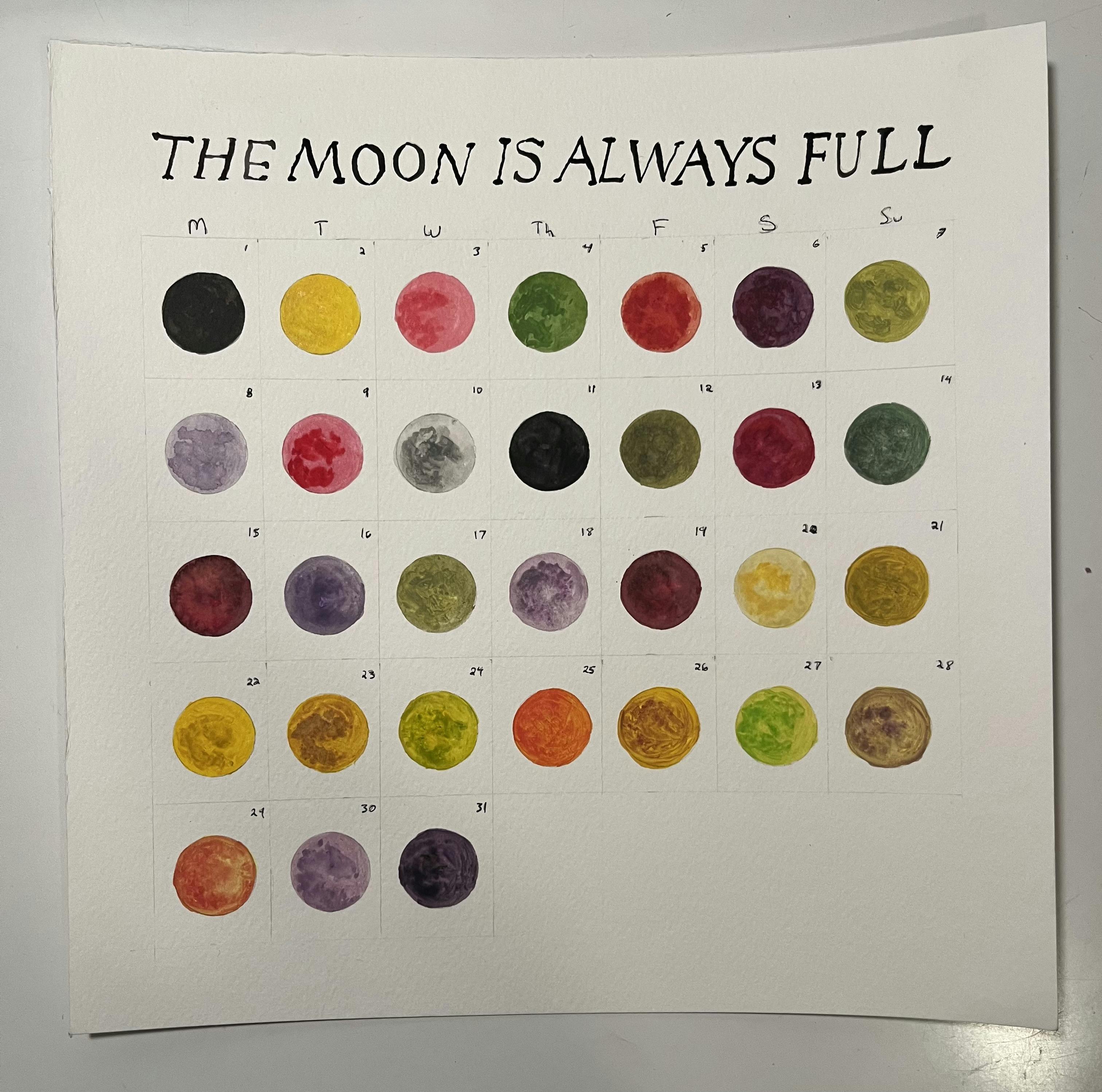
At Powder Mountain, Hollander’s work The Moon is Always Full is a circular neon installed in the entrance to the Timberline Lodge, creating a luminous reflection on the lunar cycle and its relationship to perception and time. Time—it’s marking, and its passage, as revealed by living beings and complex systems—is a central theme in Hollander’s work. Indeed, the moon is always full because fullness is a matter of the relative perspective of the viewer as heavenly bodies rotate in an orbital dance. Hung high on the wall like a rising moon above the ridgeline, the work calls us back to a time when, for millennia, the moon was humanity’s most reliable clock. Before mechanical time, lunar cycles marked agriculture, religious festivals, and navigation. The cycle of waxing and waning offered a visible, universal measure of time, unlike the sun’s constancy—an eternal reminder of cycles and return. In art history, depictions of the moon often signal time’s passage, but also its mystery: light that is reflected, not produced.
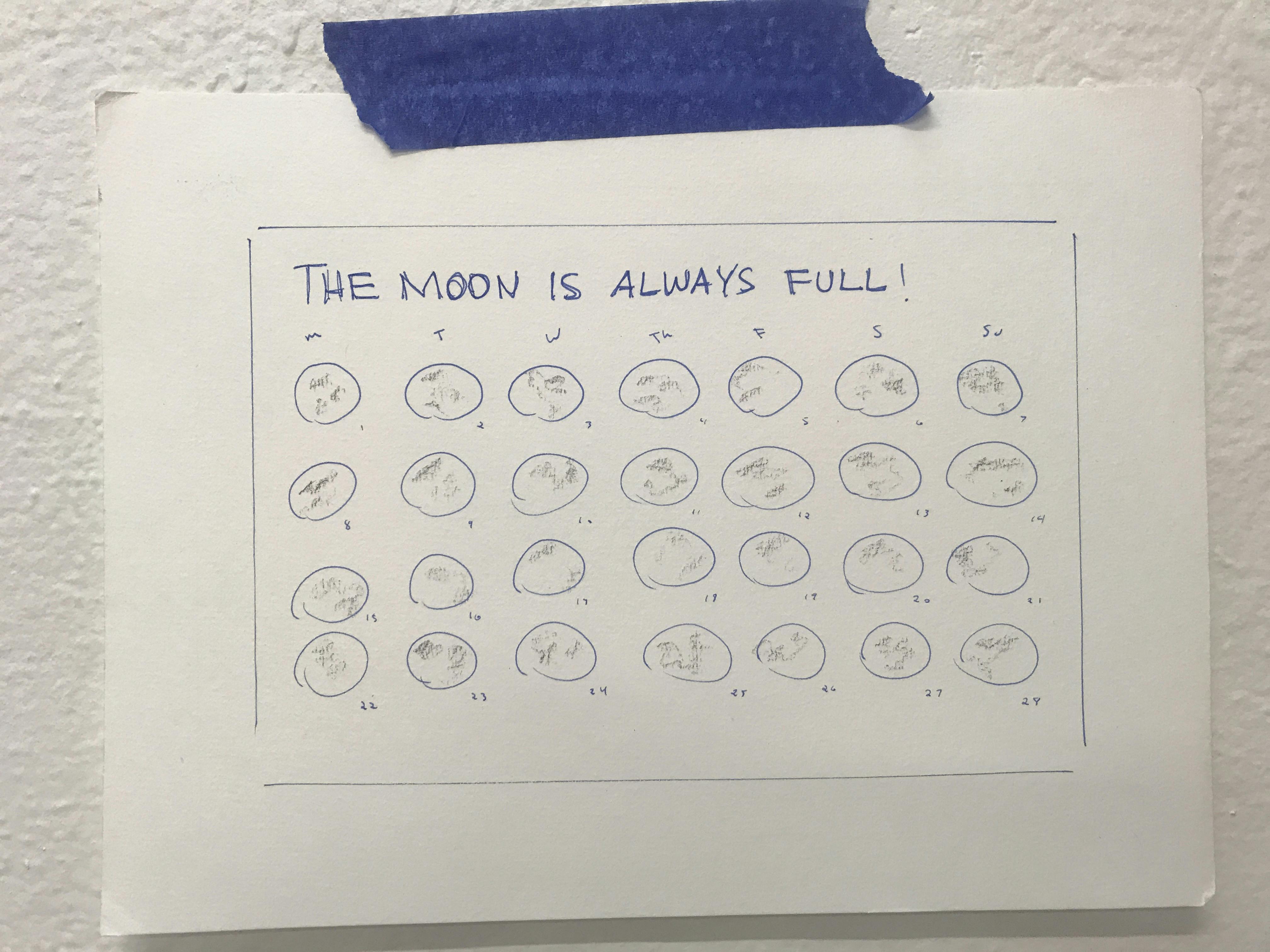
On mountains, the moon long guided orientation and movement, as moonlight was vital to safe passage along ridgelines. In winter, reflected moonlight on snow creates a surreal, heightened perception of landscape. This reflected light became romanticized in snowboard culture as full moon rides under the cover of darkness allowed renegade snowboarders to sneak into resorts to ride after hours. During the 1984-85 winter season, Powder Mountain became the first ski resort in Utah to welcome snowboarders at a time when most ski resorts banned the new sport, a rebellious streak that continues today. With The Moon is Always Full, Hollander crystallizes a sense of simultaneous stasis and change: the moon as both cycle and constant, always returning, always present, always full.


AboutTheArtist

Initially trained as a ballet dancer, Madeline Hollander (b. 1986, Los Angeles) studied cultural anthropology and visual arts at Barnard College (BA) and Bard College (MFA), New York. Solo exhibitions of her work have been mounted at the Whitney Museum of American Art (2021); the University of Texas at Austin, Visual Arts Center (2020); Bortolami Gallery, New York (2020); The Artist’s Institute, New York (2018). Her work has been exhibited at The Metropolitan Museum of Art, New York, (2023); Brandhorst Museum, Munich, Germany (2022); Performa Biennial, New York (2021); The Aldrich Museum, Connecticut (2020); the Whitney Biennial curated by Rujeko Hockley and Jane Panetta (2019), Helsinki Contemporary, Finland (2019), the Work Marathon Festival at the Serpentine Galleries in London (2018), and Centre Pompidou Metz, France (2019). As a choreographer, Hollander’s pieces have been performed at the Joyce, New York; The Théâtre des Champs-Elysées, Paris, and Louvre Abu Dhabi with the Los Angeles Dance Project, and she has collaborated with Jordan Peele on his feature film Us (2019) and Urs Fisher’s immersive installation PLAY at Gagosian, New York (2019) and Jeffrey Deitch, Los Angeles, CA (2019).