PAF007Kayode Ojo, “...and that they hadn’t heard us calling, still do not hear us, up here in the tree house...”, 2025
Medium
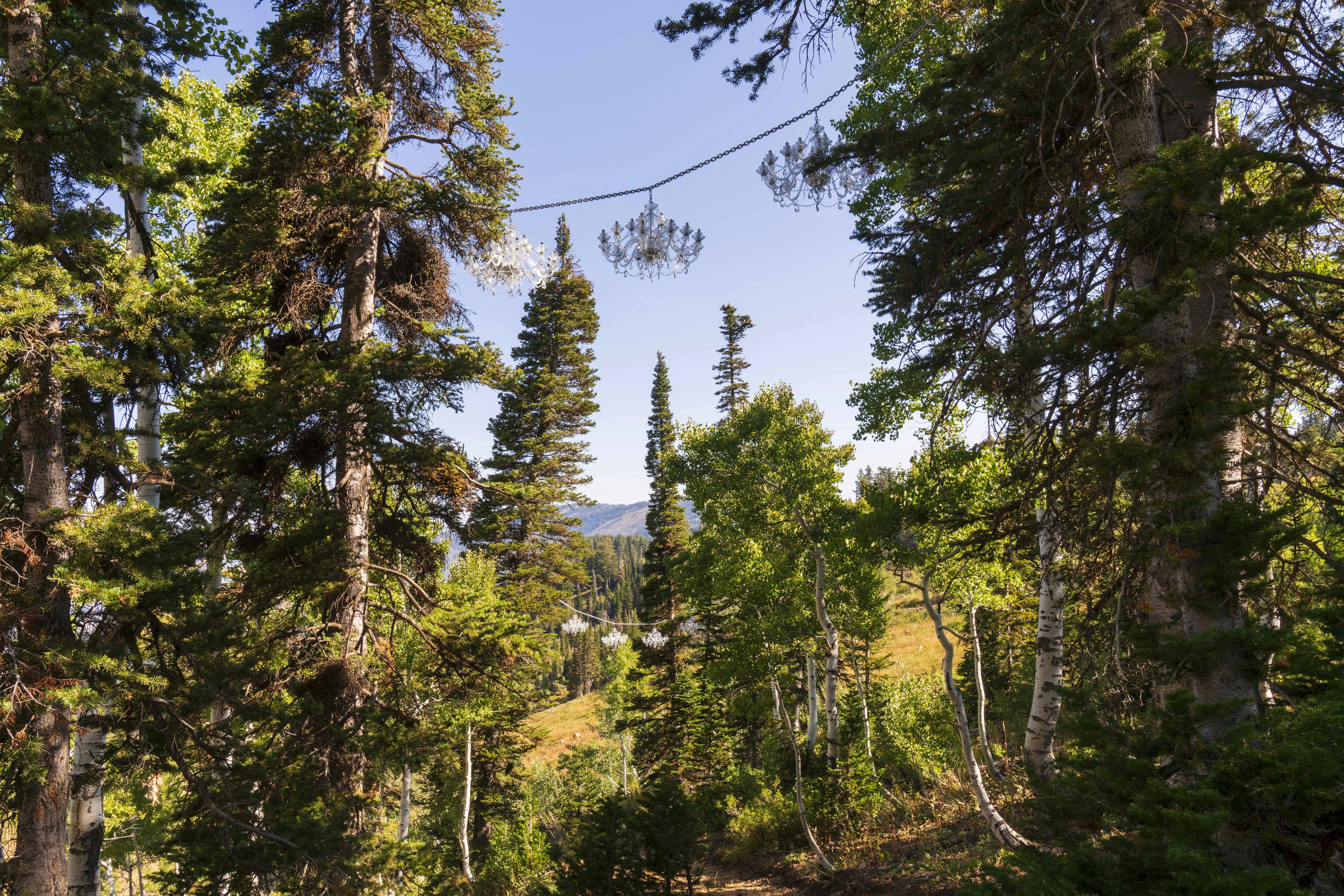
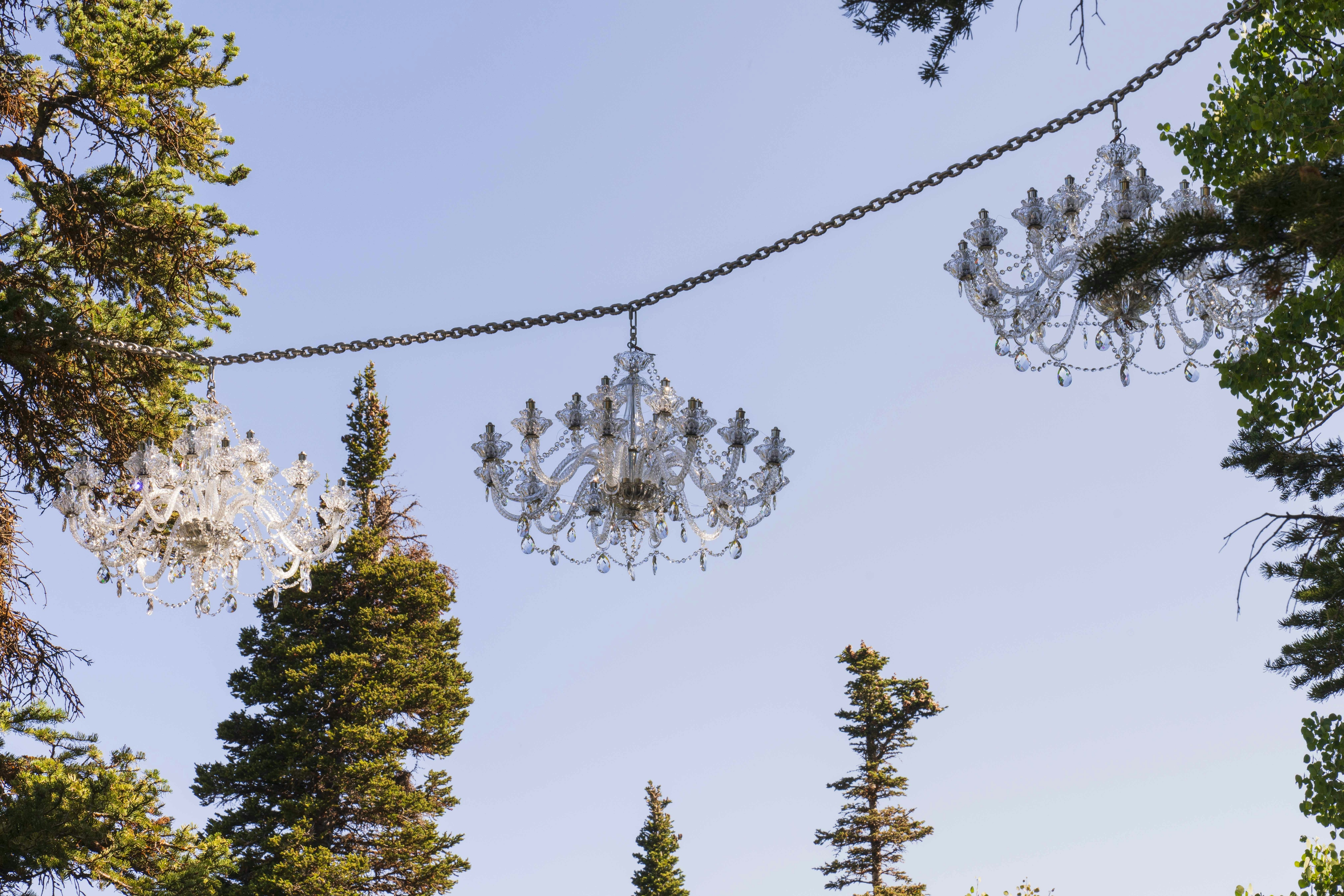
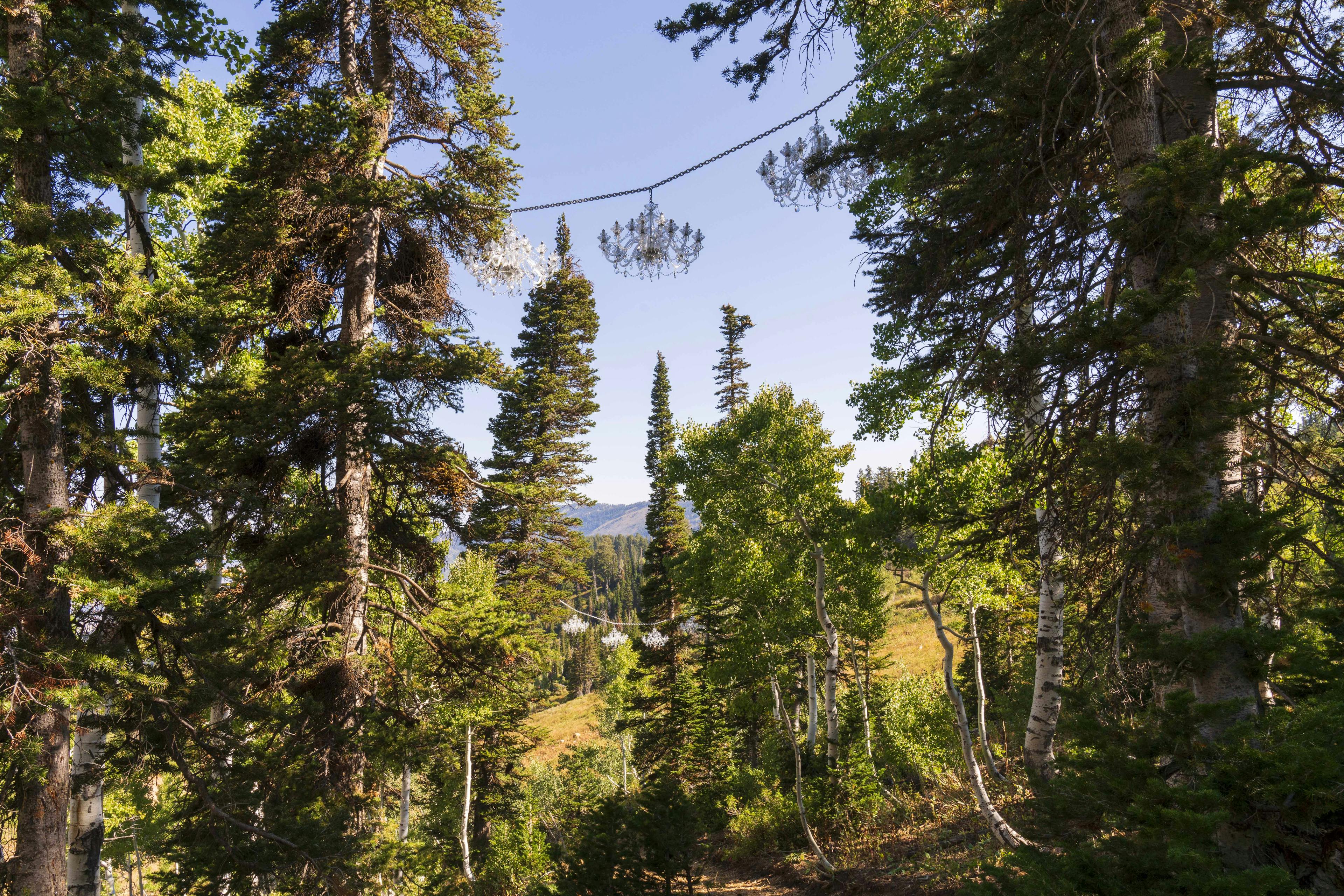
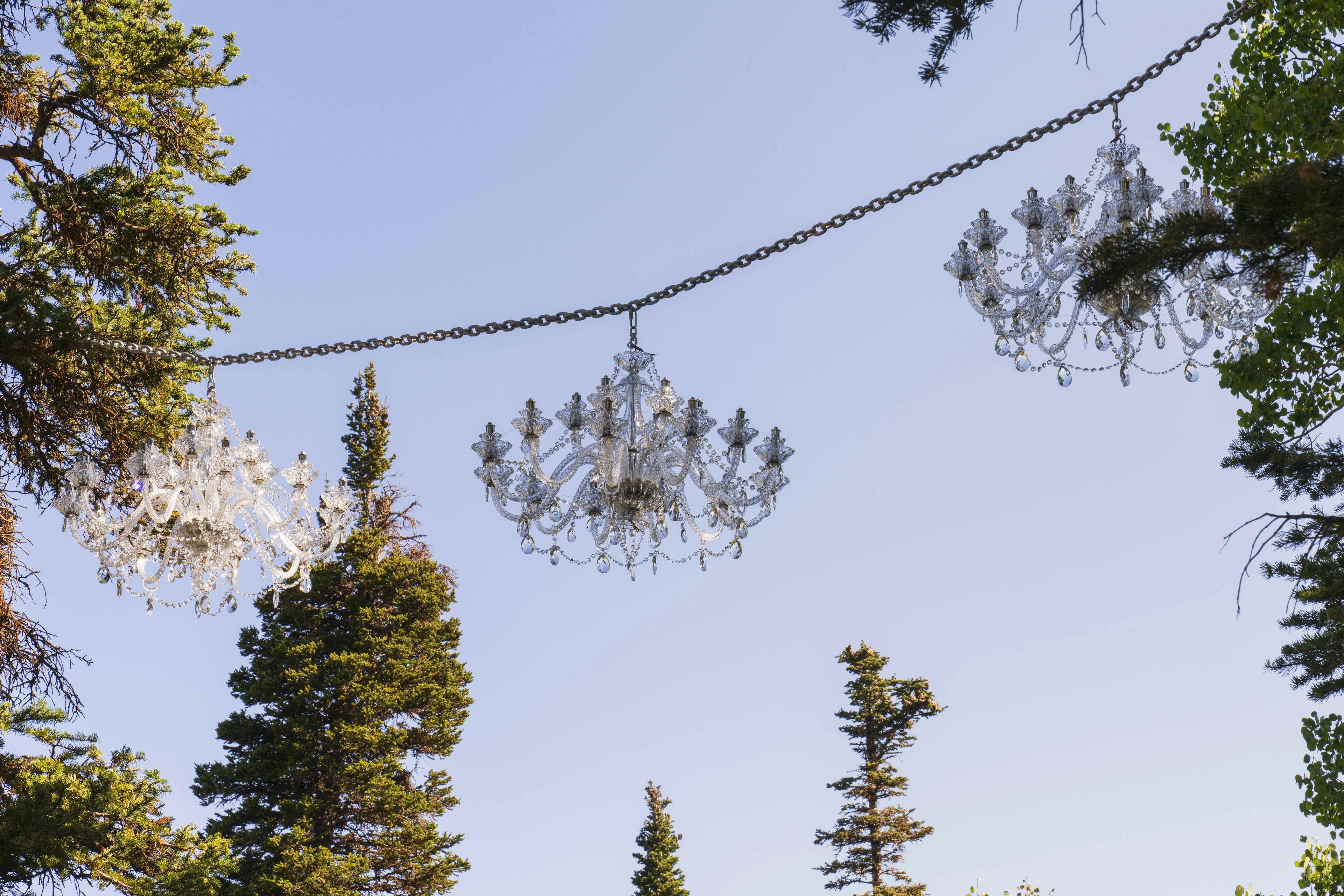
21 Durahonn K9 crystal chandeliers
Date
2025
Dimensions
24 1/2 x 27 x 40 inches (each); 28 1/2 x 225 x 200 feet overall
Photos
Ben Moisen Photography.
Carlson Art Photography.
Kim Raff.
Kayode Ojo creates precisely composed sculptures using found objects that constitute a kind of hyper-online glamor—elements like faux luxury jewelry, reproduction designer furniture, ersatz crystal home furnishings, and mirrors. Ojo makes the infrastructure and logic of online shopping core elements of his practice, working with the rhythms of scrolling, selecting, shipping, and unboxing to shape visually sumptuous installations that charge the space around them with aspiration, longing, and nostalgia. His work reveals the ways in which our physical world—and more specifically, the physical manifestation of our dreams and desires—is increasingly warped and conditioned by digital photography, interfaces, and relations.
Often improvising his sculptures on site in response to the exhibition space, has created his first large-scale outdoor commission hidden in a forest grove on Powder Mountain. Viewers entering the trees chance upon a dense installation of chrome and crystal chandeliers suspended by chains from the trees, recalling an oversized necklace thrown from a nearby chairlift. Transforming the forest clearing into an exuberant, outdoor ballroom, Ojo’s installation comes alive with the changing of the light, the wind, and the seasons.
The earliest Medieval and Renaissance chandelier designs drew direct inspiration from nature, with wooden or metal arms radiating outward like branching trees. Later designs incorporated vines, flowers, and glass drops shaped like leaves, berries, or icicles. In the 18th and 19th centuries the crystal itself became a natural metaphor, as sparkling pendants were employed to refract light like dew, frost, or the stars, evoking atmospheric and cosmic natural forces imagined as frozen cascades, waterfalls, or “gardens of glass.” Returning these abstracted tree forms back to the forest, Ojo’s installation creates a feedback loop that theatrically collapses artifice and nature.


AboutTheArtist
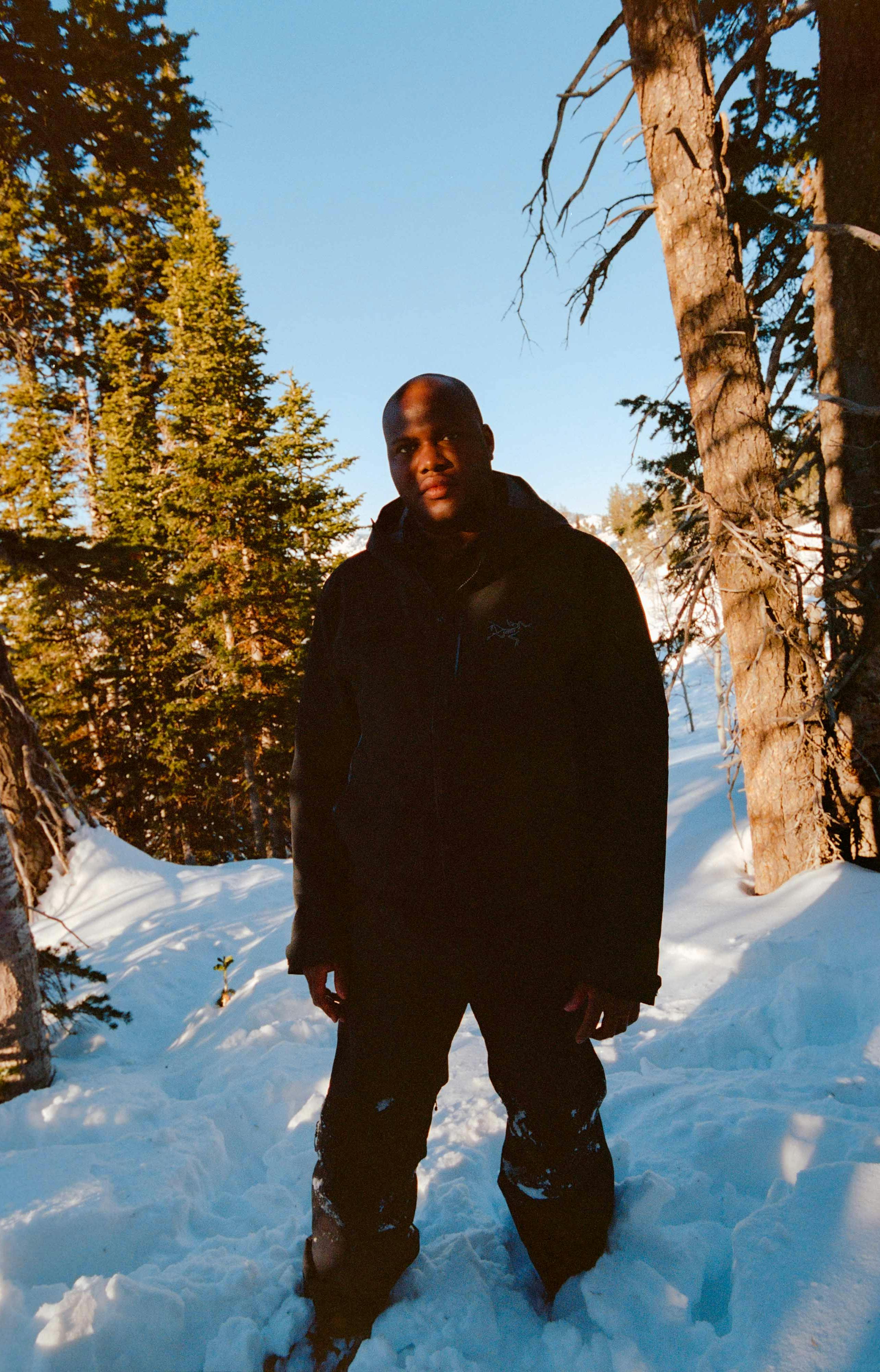
Kayode Ojo was born in 1990 in Cookeville, Tennessee, and lives and works in New York. His work has been exhibited at the Kestner Gesellschaft, Hanover; MoMA PS1, New York; and the Athens Biennale, among others, and is featured in the permanent collections of the CCS Hessel Museum of Art, Annandale-on-Hudson; Museum Brandhorst, Munich; Museum of Contemporary Art, Los Angeles; the Stedelijk Museum in Amsterdam; and the Studio Museum in Harlem, New York.